Knowing our history, knowing our community
News Story
By Dr Emily Garside
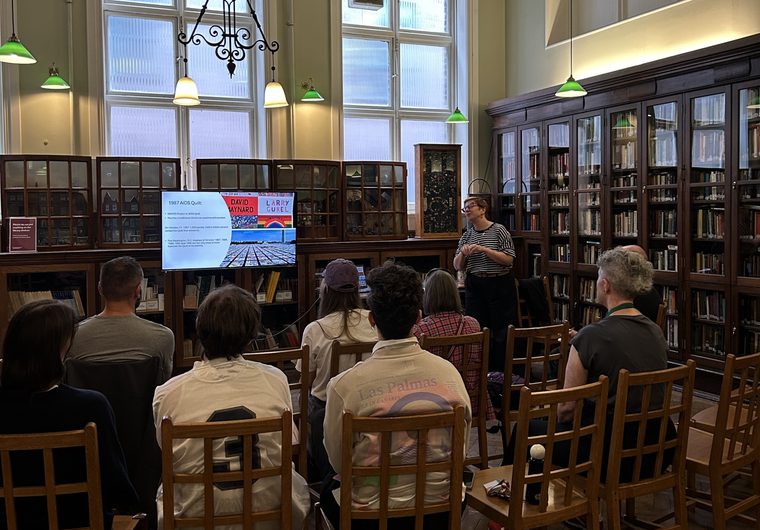
Dr Emily Garside delivering a talk in the Library at Bishopsgate Institute
‘Know your history’ or ‘Oscar Wilde wasn’t gay when I was in school’
Two things I often say in teaching Queer history.
‘Know your history’
Because, for various reasons, it has been lost to us.
And
‘Oscar Wilde wasn’t gay when I was in school’
Because, as a child of Section 28/Thatcherism, somehow, every single LGBTQIA+ person who wrote a book we read, was part of history we learned about, or wrote music we learned…was straight. Or at least very much was not gay, at least according to what we were taught.
That’s why, too, I never assume anyone knows their Queer history, knows the story of Wilde, or Ivor Novello. Because, despite being famous stalwarts of both British Culture (whatever that might mean), they’re just two examples of people whose stories were…altered for public, and certainly school-level consumption. Indeed, dear Old Ivor grew up on the same street my Dad would later live on, and despite knowing what his back garden looked like, I didn’t know he was gay until an embarrassingly late age.
That, too, is why I always approached my work through a populist, pop culture lens…not least because Queer people have always been at the heart of pop culture. After all, do we have pop music, fashion, and theatre without us? I think not. But also, because pop culture, art, music, books, and TV are how we access and understand the world around us. And for so long, we weren’t hearing the Queer stories from them.
So, while Oscar Wilde might not have been gay when I was in school, I’ve made it a mission to talk about all the queer books. Not just for the ‘classics’ like dear old Wilde or Tales of the City or The Colour Purple (another one that managed to be ‘not gay’ when we were in school). But also, for the newer stories, the ones that are also important, Fun Home and its impact on Graphic Novels, but also lesbian narratives. To yes, the gay romance novels that, while taking the world by storm, call back to pulp fiction novels of decades past, also allow queer folks who never saw themselves in romance to have stories they finally feel seen in.
Populism, so-called ‘low-brow’ culture, has been at the heart of what I do as a writer, as a researcher, because it’s what made me ‘know my history’. I wasn’t old enough to remember the hardest years of AIDS, but I learned about it through theatre. So that’s how I ended up with a PhD in it, and yes, partly in the most populist AIDS theatre piece of all, ‘Rent’. But also lost in Brechtian-American-politics-with-ghosts madness in Tony Kushner’s epic theatre piece (in every sense), Angels in America. From those, I found more gay drama (not just dear old Oscar). I found stories that spoke to my experiences and to those I had never heard about, never been taught about. Four years of a history degree, and I learned more about LGBTQIA+ folks' experience in the Holocaust from Martin Sherman’s play Bent than in history textbooks.
Stories, and specifically Queer stories, were always my way in. Realising too that TV had been my way of finding Queer folks when I had none in my real life, led me down that rabbit hole. Whether that was watching Queer as Folk surreptitiously as a teenager or finding queer joy in Schitt's Creek during the darkest days of lockdown, finding hope, and being seen in these pockets of culture gave me the bits of history and community I’d always felt were missing.
All of this led me somehow on a side quest back to Ivor Novello. Sort of. In all this, I wondered where the gap in my identity as a Welsh person, and my Queer identity overlapped. Where was the culture of Wales I was so proud of, sitting with the Queer culture I also craved? And why had nobody pulled these threads together before? And so somehow, I found my way back to Ivor Novello, not to his back garden, but in piecing together my Welshness with my Queerness, in writing a book about Queer Welsh icons, be they sporting heroes of a sport I’d done my best to avoid (Gareth Thomas) or writers I’d spent a lot of time already immersed in the world (s) of (Russell T Davies), musical theatre stars from the Welsh Valleys who had been in categorically the worst production of the musical I did my PhD on (Luke Evans), or camp 90s pop stars who once again despite being in the campest band of the 90s, weren’t allowed to be themselves (H from Steps).
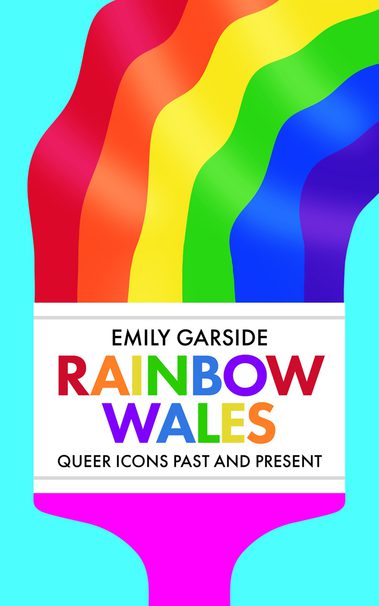
And it might sound silly to say so much history is unlocked via H from Steps. But if I could grow up in the 90s being asked to be proud of H from Steps being Welsh, but not allowed to be proud of him being part of the LGBTQIA+ community too… that brings me full circle to the stories we weren’t allowed to be proud of, but were always there. They might be literary masterpieces, writers or historical figures. Or they might be 90s pop band icons. They all make up that tapestry of Queer stories. Our stories. And with them we can ‘know our history’.
When Oscar Wilde wasn’t allowed to be gay, I never quite thought H from Steps would be the key to understanding why that was important, but actually, connecting the dots from plays to pop songs was the key, in fact, to knowing my queer history.
Dr Emily Garside
Emily Garside is a writer and professional nerd based in Cardiff. She has a PhD in theatrical responses to the AIDS crisis and is a leading expert on LGBTQ+ theatre. Emily regularly writes for journals such as The Queer Review, American Theatre, and Wales Art Review. She published her first non-fiction book ‘Love That Journey For Me: The Queer Revolution of Schitt's Creek’ in 2021 with 404ink. This was followed by ‘Angels in America at the British National Theatre’ in 2022 (McFarland). While 2023 sees ‘Seasons of Love, why Rent Matters’ (Applause), ‘Schitt’s Creek and the Rise of Queer TV’ (Applause), and ‘From Queer as Folk to It’s A Sin; Russell T Davies and Queer TV’ (Calon Books). She is also a journalist, a regular contributor for The Queer Review and has written for American Theatre, Slate, BBC, and The Stage. She also uses her research and lived experience to tell queer stories through fiction, having had several plays performed in London and nationally.